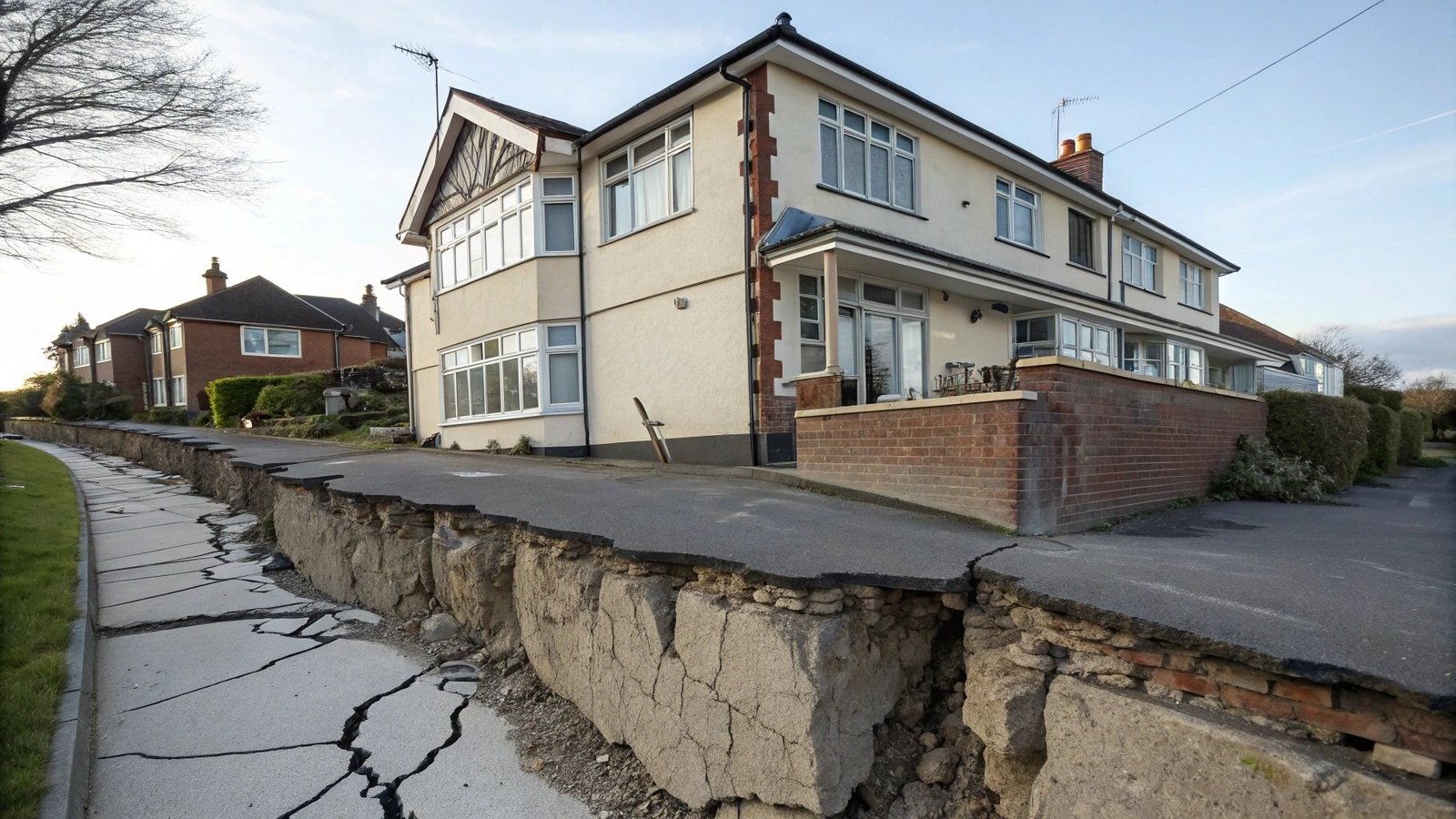
Subsidence is one of the most serious issues that local surveyors can discover during property inspections. When home buyers make contact with My Local Surveyors Direct about properties showing movement or cracks, their primary concern is whether it's subsidence – and what that means for their purchase.
In this comprehensive guide, our network of building surveyors explain everything about subsidence: what it is, what causes it, warning signs, repair methods, insurance implications, and how to make informed decisions when building surveys identify ground movement issues.
What Is Subsidence?
Subsidence occurs when the ground beneath a property's foundations moves downward, causing the building above to sink and crack. It's different from settlement (natural compression of new buildings) or heave (ground swelling and pushing foundations upward).
The key difference between subsidence and normal settlement:
- Settlement: Normal in new buildings, stops after 10-20 years, rarely serious
- Subsidence: Can occur in any age property, may continue, potentially serious, requires investigation
When building surveyors carry out inspections, they assess whether cracking indicates historic settlement (stable) or active subsidence (ongoing concern).
Common Causes of Subsidence
1. Clay Soil Shrinkage
The most common cause in the UK, particularly in South East England. Clay soil shrinks during dry periods and expands when wet. This constant movement stresses foundations. Areas with clay soil see significantly more subsidence claims than those with rock or sand.
2. Tree Roots
Large trees near properties draw moisture from clay soil, causing it to shrink. Problem trees include:
- Oak (can affect properties 30m+ away)
- Poplar (affects 30m+ radius)
- Willow (affects 40m+ radius)
- Elm (affects 25m+ radius)
- Ash (affects 20m+ radius)
Tree-related subsidence typically worsens in summer when trees actively draw water. Insurance claims spike in autumn when cracks become visible after dry summers.
3. Leaking Drains
Water escaping from damaged underground pipes washes away soil beneath foundations, creating voids that cause subsidence. Drain surveys often identify this cause when building surveyors suspect leaks.
4. Mining Activity
Former coal mining areas (parts of Yorkshire, Midlands, Wales, Scotland, North East) can experience subsidence decades after mines close. Some areas qualify for compensation under the Coal Authority's Subsidence Damage scheme.
5. Other Causes
- Natural underground cavities or erosion
- Vibration from heavy traffic or construction
- Changes in ground water levels
- Inadequate foundations (older properties)
Warning Signs of Subsidence
Local surveyors look for these telltale indicators during property inspections:
External Signs
- Diagonal cracks in walls: Particularly wider at top than bottom, especially near doors/windows
- Stepped cracks: Following brick/block lines
- Cracks wider than 3mm: Especially if progressive
- Cracks extending through DPC: Significant indicator
- Rippling or bulging walls: Particularly at base
- Leaning or bulging walls: Often visible from ground level
Internal Signs
- Doors and windows: Sticking, won't close, or dropped
- Gaps: Between walls and ceilings/floors
- Floor sloping: Particularly if recent
- Cracked plasterwork: Especially diagonal cracks
- Wrinkled wallpaper: On chimney breasts
Important: Not all cracks indicate subsidence. Many older properties have historic cracks that are stable and harmless. This is why the efficient service provided by experienced building surveyors is crucial – they distinguish between concerning and benign movement.
How Building Surveyors Assess Subsidence
When the survey i required identifies possible subsidence, surveyors undertake several assessments:
Visual Inspection
Examining crack patterns, widths, and locations. Diagonal cracks radiating from corners are particularly concerning. They'll also look externally for potential causes like nearby trees or ground level changes.
Crack Monitoring
For suspected active movement, tell-tales or crack monitors may be recommended. These measure whether cracks are widening over weeks or months, indicating ongoing subsidence versus stable historic movement.
Investigation Recommendations
Building surveyors often recommend specialist investigations including:
- Structural engineer assessment
- Trial pits to inspect foundations
- CCTV drain survey
- Soil analysis
- Tree species identification
These provide definitive answers about causes and necessary remediation. Customers with suppliers from our network report that detailed investigation helps them understand the work required and make informed decisions.
Subsidence Repair Methods
Underpinning
Cost: £10,000-£50,000+
The traditional solution, underpinning strengthens existing foundations by excavating beneath them and extending them deeper into stable ground. Modern techniques include:
- Mass concrete: Traditional method, excavating in stages
- Piled underpinning: Driven or bored piles to stable strata
- Resin injection: Modern method, injecting expanding resin to stabilize
Tree Management
If trees cause subsidence, options include:
- Pruning: Reducing canopy size (£500-£2,000)
- Root barriers: Preventing root growth toward property (£2,000-£5,000)
- Removal: Last resort, as can cause heave (£1,000-£5,000)
Tree removal should be carefully considered. Eliminating moisture uptake can cause clay to swell, potentially causing heave (opposite problem). Building surveyors and structural engineers advise on appropriate action.
Drain Repairs
If leaking drains cause subsidence, repair them first. Once leaks are fixed and ground stabilizes (6-12 months), structural repairs may be unnecessary. Drain repairs cost £500-£3,000 typically.
Do Nothing
Sometimes monitoring is appropriate. If movement is historic, stable, and not worsening, major intervention may be unnecessary. Annual inspections confirm stability.
Insurance and Subsidence
Making Claims
Most buildings insurance covers subsidence. Key points:
- Excess typically £1,000-£2,000 (higher than standard)
- You must prove damage is ongoing
- Insurers investigate thoroughly before accepting claims
- Process can take 12-24 months
- Insurer arranges repairs once cause confirmed
Future Insurance
Properties with subsidence history may face:
- Higher premiums (10-25% increase typical)
- Higher excesses for subsidence claims
- Some insurers won't cover (use specialists)
- Need to declare history when changing insurers
However, successfully repaired subsidence with guarantees is usually insurable, albeit at higher cost.
Buying a Property with Subsidence
If your survey identifies subsidence, you have options:
Option 1: Walk Away
If subsidence is active, severe, or cause unclear, walking away protects you from expensive problems. While survey costs are lost, it's better than buying a problem property.
Option 2: Renegotiate
Use survey findings to reduce the price. Deductions should cover:
- Actual repair costs
- Investigation costs
- Inconvenience during repairs
- Future increased insurance
- Reduced property value/saleability
Realistic reductions range from £10,000 to £100,000+ depending on severity.
Option 3: Require Repairs Before Purchase
Insist seller undertakes repairs with appropriate guarantees before completion. Ensures work done properly and shifts risk to seller.
Option 4: Proceed with Monitoring
If movement appears historic and stable, proceed with periodic monitoring. Some home owners and home buyers accept minor subsidence if price reflects this.
Mortgage Implications
Lenders take subsidence seriously:
- Active subsidence: Most lenders refuse mortgages until repaired
- Historic with repairs: Usually mortgageable with guarantees
- Monitoring: Some lenders accept with engineer confirmation of stability
- Retention: Lenders may withhold portion of loan until repairs complete
Your mortgage offer may be declined after survey if significant subsidence is found. This protects both you and lender.
Preventing Subsidence
While you can't control all factors, preventive measures help:
- Tree management: Keep large trees 1-1.5x their mature height away from property
- Drain maintenance: Repair leaks promptly, have drains checked periodically
- Ground level: Avoid raising soil/paving around property
- Foundations: Ensure adequate for soil type (when building)
- Monitoring: Watch for early signs, act quickly
- Appropriate planting: Choose species carefully near buildings
Frequently Asked Questions
How long do subsidence repairs take?
Investigation and monitoring: 6-12 months. Actual repairs: 1-3 months. Complete process: typically 12-24 months from discovery to completion. The work required depends on severity and cause.
Will subsidence happen again after repair?
Properly repaired subsidence shouldn't recur. Underpinning typically comes with 10-25 year guarantees. However, if the cause isn't addressed (e.g., trees left), problems may return.
Can I sell a property with subsidence?
Yes, but disclosure is required. Properties with repaired subsidence sell for 5-25% less than equivalent properties. Active subsidence is very difficult to sell without significant price reduction.
Is subsidence always visible?
No. Early stages may not show obvious cracks. This is why professional surveys by local surveyors are important – they're trained to spot subtle signs home buyers might miss.
Does subsidence affect all properties equally?
No. Properties on clay soil are most vulnerable. Those on rock or sand rarely experience subsidence. Properties with shallow foundations (pre-1900) are more susceptible than modern buildings with deeper foundations.
Get Expert Subsidence Assessment
Subsidence is serious but manageable with expert advice. My Local Surveyors Direct connects you with building surveyors experienced in identifying and assessing ground movement issues. They provide detailed reports explaining what they've found, likely causes, and recommended actions.
Our network includes surveyors who regularly deal with subsidence cases. They understand investigation processes, repair options, and insurance implications. Their comprehensive reports give you information needed to make informed decisions.
Most customers receive really fast response when they make contact – typically within 24 hours. Surveys are usually carried out within a week, providing crucial information while your purchase timeline remains viable.
Concerned about subsidence in a property you're considering? Contact My Local Surveyors Direct today and we'll connect you with experienced building surveyors in your local area who can assess the situation professionally.
Don't let subsidence fears prevent you buying your dream property – or worse, buy one without understanding the risks. Get professional assessment and proceed with confidence.